All Writing

The Archive

A living repository of essays, reflections, and inquiries from The Rain Dance Institute.

Collection

The Rain Dance Papers

Volume I — A series of twenty-three essays on decolonial thought, African history, and the contested politics of identity, knowledge, and belonging. Written from the Southern tip of Africa, for anyone willing to look at the world differently.

Essay 1

The Cape Coloured Conundrum

Who are the Cape Coloured people, and why does the question remain so contested? An inquiry into identity, colonial naming, and the politics of belonging.

Essay 2

Who Named Us?

One of the most overlooked questions in history is also one of the simplest: who gave us our names, and what did those names mean to do?

Essay 3

The Invisible Empire

Many people imagine colonialism as something that ended decades ago. This essay argues that its structures remain very much alive — just harder to see.

Essay 4

The Eurocentric Media Machine

Most people believe they arrive at their opinions independently. This essay examines the systems that shape what we think before we think it.

Essay 5

Cowboys, Indians and the Colonial Imagination

Long before social media algorithms, Hollywood was teaching the world who the heroes were — and who the savages were.

Essay 6

Eurocentric Confirmation Bias

One of the most difficult things for any human being to do is change their mind — especially about the history they were raised to believe.

Essay 7

History Written by the Victors

Who controls the past controls the future. This essay examines how historical narratives are constructed, curated, and contested.

Essay 8

Frantz Fanon and Colonial Violence

When people hear the word violence, they usually think of physical harm. Fanon understood that colonialism operated on a much deeper register.

Essay 9

The African Petite Bourgeoisie

When African nations achieved independence, a new class emerged that inherited colonial structures rather than dismantling them.

Essay 10

The Myth of Neutral Knowledge

Most people are taught to trust knowledge as objective and universal. This essay asks: whose knowledge, produced by whom, and in whose service?

Essay 11

Eurocentrism and International Relations Theory

International Relations as a discipline was built to explain a world ordered by European power — and still carries those assumptions quietly forward.

Essay 12

The Desert Fathers and the Forgotten African Roots of Christianity

Many people associate Christianity primarily with Europe. This essay recovers the African origins that European history chose to forget.

Essay 13

South African Veldskool History

Long before classrooms, people learned from the land itself. This essay recovers an indigenous pedagogy embedded in place, season, and story.

Essay 14

Remembering the Rainmakers

Every society preserves memory in different ways. This essay asks what happens when those ways are systematically destroyed.

Essay 15

Song as Resistance

Throughout history, oppressed communities have discovered that songs can travel where books cannot and outlast what empires try to bury.

Essay 16

The Lost Language of the Ancestors

Every language contains a unique way of seeing the world. When a language dies, that vision dies with it — unless someone chooses to remember.

Essay 17

Beyond Colonial Categories

Perhaps the greatest legacy of colonialism is not what it did to the land, but what it did to how we see and name ourselves.

Essay 18

A Luta Continua

The struggle continues. This closing essay asks not only what we are struggling against, but what we are struggling toward.

Essay 19

It Is Easier to Fool People Than to Convince Them That They Are Being Fooled

On deception, denial, and the psychology of those who would rather defend a comfortable lie than confront an uncomfortable truth.

Essay 20

The Wild Men Among Us

From apartheid categories to Swiss debates about immigration, an inquiry into how every generation reinvents its own version of the outsider — and what it costs those on the receiving end.

Essay 21

More Colours Enhance a Painting

Skin colour is ancient; whiteness is modern. A look at how talent has always been universal, while opportunity — from the football pitch to the rugby field — has not.

Essay 22

The Basin, the Towel, and the Pulpit

On the night before the cross, Jesus did not lecture His disciples about humility — He knelt and washed their feet. On servant leadership, wounded identity, and the false doctrine that grows from a leader’s need to be seen.

Essay 23

Before 1291: Hannibal, Roman Africans, Desert Monks and the Long Making of Switzerland

Before the Federal Charter of 1291, African armies crossed the Alps, Roman roads linked Switzerland to the Mediterranean, and Egyptian desert monks helped shape its Christian inheritance — a longer story than the national myth allows.

Rain Dance Institute · The Rain Dance Papers, Volume I · 2026

Recommended Viewing

Hennie van Vuuren on Apartheid, Guns & Money

Investigative researcher Hennie van Vuuren on how apartheid South Africa financed its regime through illegal arms deals, sanctions-busting, and international complicity.
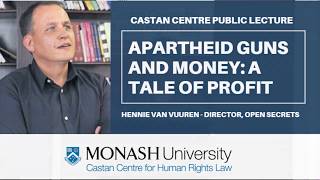

Hennie Van Vuuren: Apartheid Guns and MoneyHennie Van Vuuren — Apartheid, Guns and Money (Castan Centre) Van Vuuren on his BookHennie van Vuuren on his Book: Apartheid, Guns and Money In Conversation: Arms Deal WhistleblowerIn Conversation with Arms Deal Whistleblower Hennie Van Vuuren